In the Vedic tradition, Ramayana and Mahabharata are called Itihasa or history.

We know historical events have their proof, so the history where occurred where is the proof of war conducted by Pandavas and Kauravas
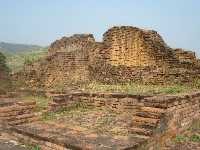
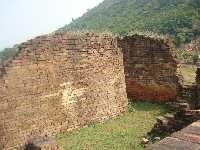
Jarasandha Ka Akhara, located near the Vaibhava Hill, was previously a wrestling arena and place for martial arts training for the armies which stood against Lord Krishna and the Yadava clan for King Jarasandha of Magadha. The great battle between Bheema and Jarasandha took place right here. The battle lasted for a month, according to legend, and in the end Bheem tore Jarasandha's body into half to defeat and kill him. Now a deserted ruins with overgrown flora, it is a favourite spot for picnickers.
Astronomer Narhari Achar has revealed the other dates of Mahabharat as follows.
28 September 3067 BC
29 September 3067 BC
8 October 3067 BC
14 October 3067 BC
22 November 3067 BC
12 December 3067 BC
17 January 3066 BC
3071 BC
3000 BC
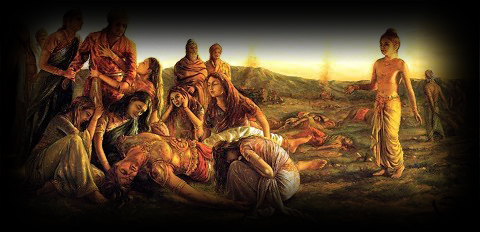

The manner in which Karna's life moved, we understood, usually, that the world is a evil place to survive in. What's more, to expert it, we should see how it truly functions.
We as a whole hate Shakuni, isn't that right? He in a real sense destroyed all that the Kauravas had, and he affected them to be negative. If not for him, the war wouldn't have occurred by any means.

The Pandavas had Lord Krishna, and the Kauravas had Karna. The two of them generally sponsored the two gatherings, regardless. Indeed, Duryodhan was truly weak without Karna.
100 Kauravas were hard to control. Also, for all intents and purposes, how would you partition a whole domain when there are countless children?
Such abilities certainly make your life simple, less distressing and keep you involved. We took this from the 'Pandavas' experience of an exile in the forest.
Dhritrashtra's affection for his child was blind. All through the epic, he stayed conflicted between his principles and keeping his child glad. By one way or another this made Duryodhan much more evil than what he previously was, prompting terrible results and the war.
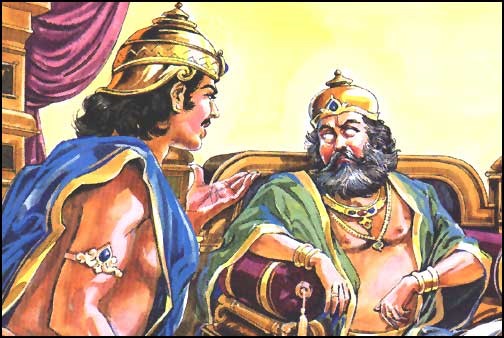
Arjun grasped whatever came his way. In addition to the fact that he learned the best of military science from Drona, yet he was additionally keen on finding out about heavenly weapons from Indra. He found out about Pashupatastra from Mahadev also. Additionally,he treated Yudhishtira and Krishna as his mentors as well, and kept realizing whatever they had to offer.
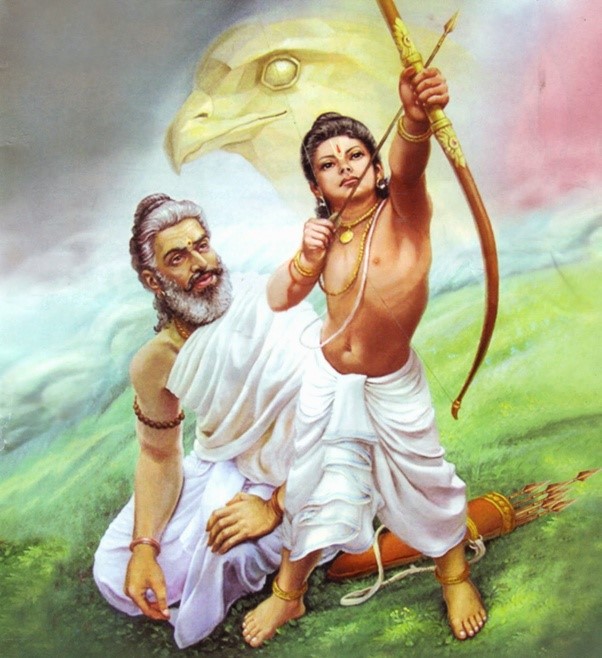
Despite the fact that the Kauravas were more in number, their allies were not generally for them. Bheeshma, Vidura and Drona secretly admired the Pandavas. Particularly Vidura, who was a ultimate guide in everything the Kauravas did.
Draupadi had five spouses. They were solid and rich, however they all became helpless when she was disgraced by various other men. They had everything, except failed to show courage.
Or then again Abhimanyu wouldn't have died. In spite of the fact that we recollect him for his bravery and undying courage, he eventually lost his life.
Or she’ll curse you and destroy you. Draupadi's anger and desire for revenge prompted the war and defeat of the Kuru tribe.